I Used To Have Full Coverage Insurance
I didn’t always only have liability insurance on my car. I once had full coverage.
It all began when I started reading Dave Ramsey’s book Financial Peace. He made a point about how so many people who struggle financially often have two new (or newer) cars sitting in their driveways.
People often squeak by, with no savings and have credit card debt. Many of these same people also have new cars with auto loans. If you have any kind of a loan on a car, full coverage insurance is generally compulsory.
Then I was reading another book about How To Survive Without a Salary. The author makes a point about the ridiculousness of having full coverage on a car that isn’t worth much.
I began thinking about the value of my manual two-door hatchback. I was paying full comprehensive and collision insurance and I had long ago finished making payments.
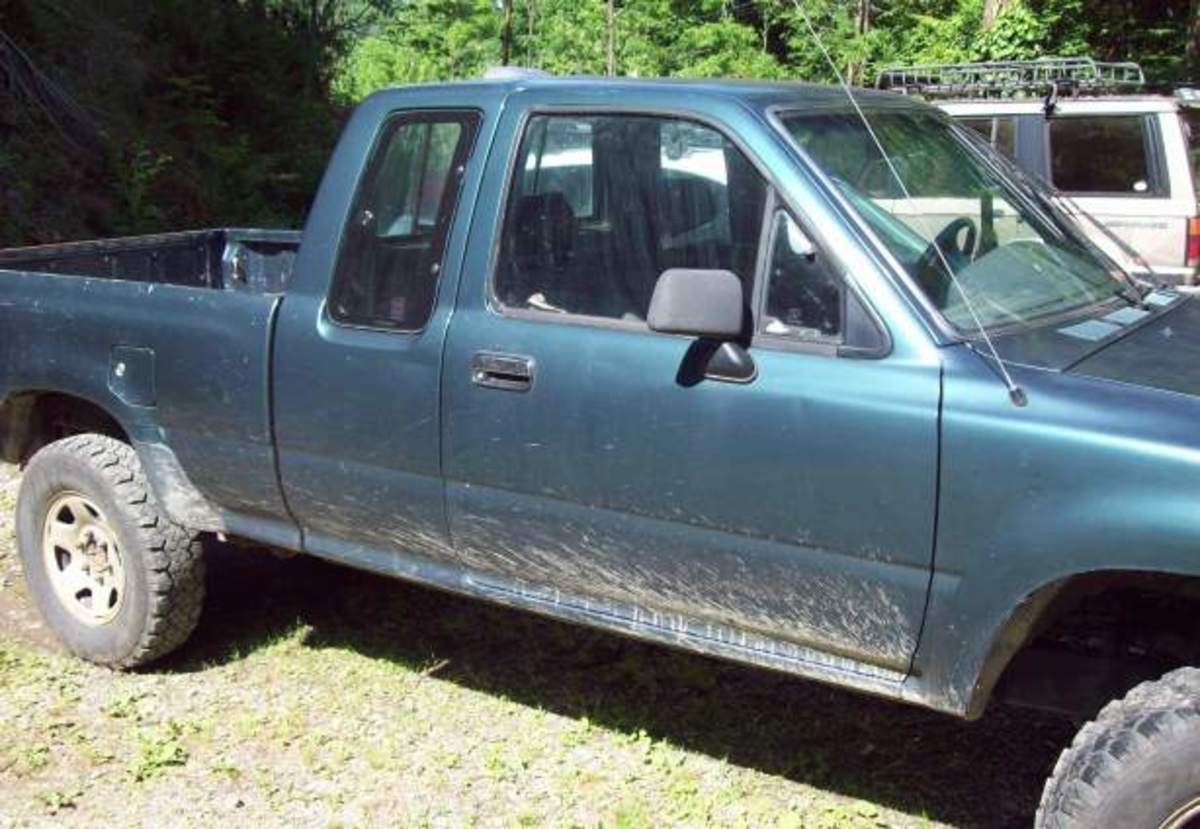
My husband's truck. We also only have liability insurance on it - it's nearly 20 years old. I LOVE how it was built to last. | Source
What Will Your Next Car Be?
A new Car - life is short!
A new, but very stripped down car.
A newer-used car.
Eh, as long as I carry liability insurance on it, I don't really care.See results without voting
New Cars Require Full Coverage Insurance
I bought my car new. Usually in my tendency to save money and be green, purchasing a new car wasn’t something I considered lightly. But, I had had a small Volkswagen car that had been in five accidents (they weren’t my fault). I traded that in for a Subaru that later leaked oil and I had to replace 5 rear-wheel bearings. Those repairs were not cheap.
I finally decided to get a new car that I knew hadn’t been in an accident and was under warranty for repairs. I got a small, gas-efficient stripped-down Focus. I love my car.
Because I was making payments on it, I carried full coverage insurance. The value of the car far exceeded any cash that I had lying around.
When you’re making payments, lenders require that you have full coverage. In the event of an accident, fire, or theft, the insurance companies will still be able to collect on any amount you still owe. The full coverage insurance covers repair costs for your car and will also give you a check for your car’s value should you total it.
But, what happens when you finish all those payments?
I kept full coverage for awhile. In fact, I kept it on until my car’s value depreciated to about $5000. That was in late 2010.
After that, I called my auto insurance company and canceled my comprehensive and collision insurance.
Why would I do that when the insurance company would pay to repair my car if it was in an accident?
Why I Canceled My Full Coverage
I had two reasons. First, I wanted a lower insurance premium. Canceling my full coverage saved me $600 a year.
Second, I now could afford car repairs. I was now willing to repair my car up to the cost of its value and had saved the cash to do so.
Thus, if the condenser for the air conditioning went out, I could fix that. If the motor stopped running, I could afford to repair it. However, if repairs exceeded the value of the car, I knew it would be time to get another car.
The thing is, I may get a new car again in the future. I am eyeing the electric cars on the market because you can get tax rebates for such purchases.
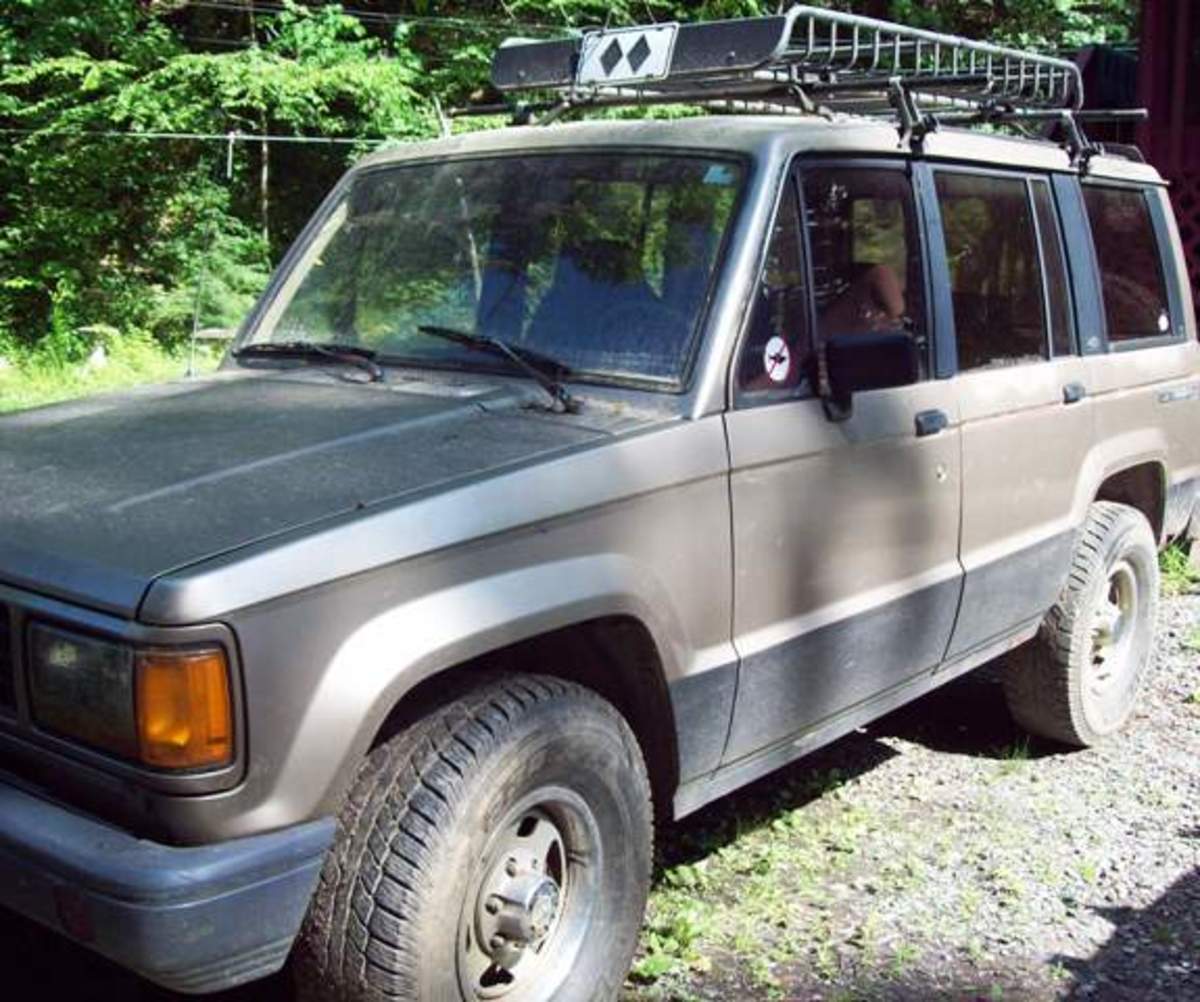
Our "spare" car. This one is a great vehicle, but it mostly sits. We don't have it licensed or insured, but if we needed to fix one of the other cars, we could easily add it on to our insurance policy. | Source
New Car and Drawbacks
But the drawbacks of having a new car are serious. For most of us, buying a new car entails car payments. You pay interest on those car payments.
Thus, a car costing $20,000 will cost you $27,000 after paying it off for 5 years at an interest rate of 7%. 20,000 x (.07/12) x 60 = 7,000. That’s a lot of extra money with which you could do a lot of things: an extra vacation, a remodel on the house, or even a down payment for a new car.
Plus, there’s the fact that you’ll have to pay for full coverage insurance throughout the life of the loan. An extra $60/month for 5 years (which is what I had on my Volkswagen when I had it) = $3600. That’s a lot of money in insurance costs. Now, you have an extra $7000 you’re paying in interest, plus the cost of full coverage at $3600. That’s $13,600 worth of extra costs over 5 years for the car!
You also have to think about how a car depreciates. As soon as you drive it off the lot, chances are, you now owe more than it’s worth. This happened to me. After about the third time someone hit my Volkswagen, I started thinking that I needed another car. I was driving a dent magnet. Unfortunately, the value of the car was less than what I owed. I had to wait another year and a half (and two more accidents) before I could finally trade it in and come out ahead.
I’ve all but convinced myself always to buy a car where I’ll need liability insurance only. Basically, liability insurance will cover the cost of repairs for the other person’s car if I’m in an accident and it’s my fault.
My policy may even help to cover medical costs, but it’s up to the individual policyholder. Insurance companies and policies are different - it's always a good idea to check with your insurance provider about the specifics of your situation.
Having a car with liability insurance means that I have a cheaper car in the first place and I don’t have to pay nearly as much in insurance costs.
I may have to fork over money for repair costs. That part is a gamble. But, chances are good that I won’t have to pay repair costs or that they won’t be that costly.
When Should You Cancel Full Coverage Insurance?
It’s definitely up to you as an individual to determine whether to carry liability insurance only on your car. Would you be comfortable footing the bill for the repair costs? Would you rather pay your insurance company to take care of that for you?
A good guideline is to determine the value of your car. I stopped carrying full coverage when its value was at $5000 because I am comfortable paying for repairs up to that value. It’s not worth the extra $600/year for me.
It also helps that my husband is great with cars – he rebuilds them. Thus, if I get into an accident, I have his truck as a backup, as well as a third car that he’s working on. It stays parked, but if I had to, I could put plates on that and add liability insurance easily.
No, it’s not as glamorous to drive around an older car. We’re programmed to like new and innovative things in our society. I’m not saying whether that’s good or bad, but if you’re a money-saver like I am, you don’t always win the “ooohs” and “aaahs” with your friends and family when you’re driving an unassuming older car.
You have to think about what’s more important to you: to be out of debt and save more money or to drive a sleek new car. Either way you pay, just in a different way.
Do You Only Have Liability Insurance On Your Car?
Yes, and I always will.
Yes, but I still want a new car.
No, but I will consider dropping it when my car's value is low enough.
No, and I am willing to pay extra for the full coverage.
No, I need a new car with all the bells and whistles, thank you very much.See results without voting
Lower Your Insurance Premiums
Indeed, it is up to you, the individual, to determine whether you will carry full coverage or liability coverage.
Weigh the cost of the premiums against the value of your car. If a car is worth $3000 and your comprehensive and collision insurance is about $200/year, you've paid 1/2 the value of your car in insurance premiums in one year. But, if you total it, the insurance company will give you a check for the value of the car at the time (which is often lower than you would think), minus the deductible. That $3000 car might be worth $1500 if you totaled it, plus the deductible. That could amount to a total of $2000.
To save on premiums, you can also raise the cost of your deductible. By going from $500 to $1000, your rates have the potential to drop dramatically. Just be sure you can handle the amount of the deductible should you ever need to pay it.
Something else to consider is the fact that if you only have liability insurance, youmust purchase the extra insurance if you ever rent a car. Your insurance will not cover you - generally - if you are in a rental car. Each policy is different, however. Check with your insurer to be sure.
Final Thoughts
When I bought my Focus, I intentionally looked for a stripped-down version. They're much easier to work on that way. They're also everywhere, so it's easy to find parts for them.
It's also nice if you have someone who's good at working on cars in the family. My husband is my insurance policy. All jokes aside, we can find parts we need and my husband can install them and/or tweak them.
If you have the space, buy a very cheap alternative car. My sister has two used older cars. When one breaks down, she can still use the other one. That way, she won't have to depend on the insurance company to come through for repairs and deductibles.
I admit it's great to have a sleek new car with all the bells and whistles. However, it's more important to me to save up for a trip to Spain or a ski trip to Patagonia than it is to have a new car.
